
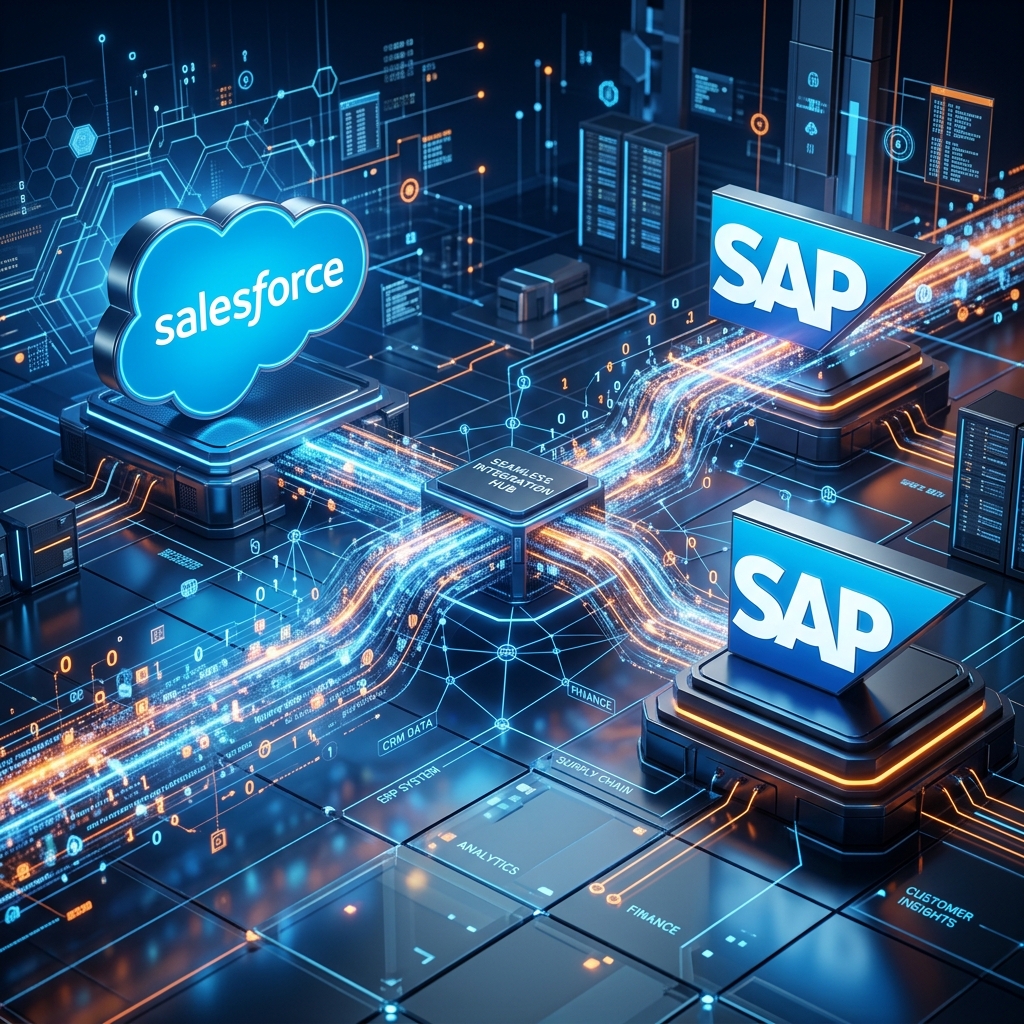
The Strategic Importance of Salesforce-SAP Integration in 2025
In the rapidly evolving digital landscape of 2025, UK enterprises are facing unprecedented pressure to deliver seamless, personalized customer experiences while maintaining peak operational efficiency. The siloed nature of data—where customer relationship management (CRM) data sits in Salesforce and enterprise resource planning (ERP) data resides in SAP—is the single biggest barrier to achieving these goals. Integrating Salesforce with SAP is no longer just a technical project; it is a strategic imperative for any business looking to lead in the UK market.
For a Salesforce SAP integration UK strategy to be successful, it must address the complexities of modern data architectures. Businesses today aren't just moving data; they are synchronizing workflows, automating supply chains, and providing real-time insights to sales teams on the front lines. This guide explores the most effective methods to bridge the gap between these two enterprise giants.
Why Integrate Salesforce and SAP? Deep Dive into the Benefits
The benefits of a robust integration are multifaceted and go far beyond simple data transfer. When your CRM and ERP systems talk to each other in real-time, you unlock several key advantages that directly impact your bottom line:
- 360-Degree Customer View: Sales representatives can see order history, credit status, and shipping updates directly within Salesforce. This allows for more informed conversations and proactive customer service. Imagine a sales rep being able to tell a customer that their order is currently being loaded onto a truck in the warehouse, without having to call the logistics department.
- Reduced Data Redundancy and Human Error: Eliminating manual data entry between systems reduces errors significantly. In the past, a misspelled address in Salesforce might lead to a failed delivery in SAP. Integration ensures that both sales and finance are looking at the same "single source of truth."
- Accelerated Quote-to-Cash (Q2C): Automating the transition from a "Closed-Won" opportunity in Salesforce to a sales order in SAP significantly shortens the revenue cycle. This speed is a competitive advantage in the UK's fast-paced business environment.
- Inventory Transparency: Real-time visibility into SAP inventory levels allows sales teams to manage customer expectations accurately. They can see exactly what is in stock and what is on backorder, preventing over-promising and under-delivering.
- Enhanced Financial Reporting: By linking sales data with financial data, CFOs can get a much clearer picture of future revenue streams and cash flow requirements.
Choosing the Right Integration Tool: A Comparison for 2025
The choice of technology is critical and depends on your budget, complexity, and internal expertise. In 2025, there are several leading contenders for Salesforce-SAP integration:
1. MuleSoft Anypoint Platform: The Enterprise Standard
MuleSoft remains the gold standard for enterprise integration. Its API-led connectivity approach allows businesses to create reusable assets, making the integration scalable and easier to maintain. For UK SMEs and large enterprises alike, MuleSoft provides the enterprise-grade security and reliability required for sensitive financial and customer data. Its pre-built SAP connector is particularly powerful, handling much of the heavy lifting of SAP's complex BAPI and IDoc structures.
2. Salesforce Connect and OData: Real-time Virtualization
If you need real-time visibility into SAP data without actually moving it into Salesforce, Salesforce Connect (using the OData protocol) is an excellent choice. This "virtual" integration is perfect for viewing heavy ERP data sets like invoices or historical orders without hitting Salesforce storage limits. It feels like the data is in Salesforce, but it's actually being fetched from SAP on the fly.
3. SAP Cloud Integration (BTP): Native SAP Synergy
For organizations heavily invested in the SAP ecosystem, using SAP's native cloud integration tools on the Business Technology Platform (BTP) can provide a more streamlined experience, especially when dealing with modern SAP S/4HANA instances. It offers deep integration with SAP's own data models.
Overcoming Common Integration Challenges
Integration is not without its hurdles. Understanding these early can save months of development time:
- Data Mapping Complexity: SAP's data structures are often flat and hierarchical, while Salesforce is relational. Mapping a 15-character SAP field to a Salesforce field requires careful logic and testing.
- Legacy SAP Versions: Integrating with older SAP ECC instances requires different strategies (often involving IDocs) compared to modern S/4HANA OData services.
- Change Management: Your teams will need to adapt to new workflows. A sales rep who used to wait for an email from finance will now see the data instantly. This requires training and process adjustment.
The UK Context: Compliance and Data Residency
For UK businesses, GDPR compliance is non-negotiable. Integration projects must ensure that PII (Personally Identifiable Information) is handled with the highest level of security. In 2025, we are also seeing a greater focus on data residency. Many UK enterprises now require that their integration middleware (like MuleSoft) operates within UK-based data centers to satisfy local regulatory requirements and reduce latency.
Future-Proofing Your Integration: AI and Beyond
As we look further into 2025, integration is becoming "intelligent." By feeding integrated Salesforce and SAP data into AI engines like Salesforce Einstein, businesses can predict customer churn based on payment delays recorded in SAP, or optimize pricing dynamically based on inventory levels. The integration becomes the "nervous system" of the digital enterprise, enabling autonomous decision-making.
Conclusion: Partnering for Success
Salesforce-SAP integration is a journey, not a destination. It requires a blend of business acumen and technical expertise. At L2 Global Tech, we have helped dozens of UK enterprises bridge the gap between their front and back offices, delivering measurable ROI and transformed customer experiences. We don't just connect systems; we connect your business to its future.
Ready to start your integration journey? Explore our Salesforce-SAP Integration Services or contact our UK team for a consultation.
L2 Global Tech Editorial
Enterprise Integration Experts